Monday, March 13, 2023

Brazil Part 3 - Amazon River Upstream

 Brazil Part 3 – Life at Sea on Seabourn Quest in the Amazon River


March 7, 2023 – Crossing the Amazon River Bar


At 1200 today Seabourn Quest nosed across the Barra Norte, or North Bar of the Amazon River.  We are now north of the equator.  The bar stretches some 40-50 miles in depth and hundreds of miles in length before the buoyed channel begins and we are in the Amazon River itself.  By about 1800 we had passed the two entrance buoys and began the 450 NM trip to Santarem, our first stop.  The water has changed to a muddy brown color and we are cautioned to conserve water because the ship cannot make water in the river silt.  So, short showers, don’t let the water run while brushing teeth, use towels more than once, etc.  Even the whirlpool tubs are on shortened hours.


It is the rainy season still, so the ship encountered many showers, some torrential, and that may continue for our entire trip.


Our days at sea are more relaxed, with later breakfasts, art classes, up to four lectures per day on the history, flora and fauna of the Amazon, various contest activities like Team Trivia, and of course, pool time in between rain showers.  There is entertainment in the evenings, with both guest entertainers and the ships entertainment staff with various show productions.


Patrick has a routine of walking on deck 9 for three miles in the morning before breakfast and then 3 more miles after lunch in the afternoon.


We eat most meals at the Patio Grill on the pool deck, where one can get almost anything for breakfast, always a different grilled fish for lunch and an eclectic al fresco dinner in the evening.  We sometimes eat at the The Grill by Thomas Keller, a 1950’s chophouse recreation, but the menu is always the same and fairly limited.  The main restaurant has a lot of choices every evening, but a more formal (and slower) service.  The casual venue is the Colonnade, which we seldom visit since it has a very limited set  dinner menu or a buffet which we avoid.


March 8, 2023 – Cruising the lower Amazon River

Overnight Seabourn Quest continued at a fairly slow speed of 8-9 knots until we reached the pilot station at Macapa, some 150 NM upriver.  The sun rose about 0615 and the pilots boarded at 0700.  The ship picked up speed, now at 15+ knots as we continued upriver to our first destination, Santarem, where the ship will anchor and there will be a variety of shore excursion options.  Patrick & Miriam will do a zodiac tour up a tributary near Ponta Negra, and Patrick will do a kayak tour in the same general area.  During the day we passed south of the equator are are now back in the Southern Hemisphere.


The expedition team is out on the stern on deck 7 for four hours per day, pointing out wildlife and interesting shore items.  The water level is high, and many of the trees are flooded with the rainy season floods in the Amazon.  There is an amazing number of small settlements or single houses on stilts along both sides of the river, serviced by a large number of small craft.  The ship’s course, following deep water passes as close as 2000 feet from shore, so the views are good.


We have seen mostly vultures, yellow beaked terns and egrets, a few swallows and several species of large butterflies, bumblebees and dragonflies.  At the speed we are traveling, not many small insects like mosquitos can keep up, however we later learned some can!


As the day progressed, rain squalls developed and periodically the ship was inundated with warm rain.  As the sun set, we had occasional lightning, but surprisingly, could not hear thunder.  Our dinner tonight was on the Patio Grill and we were joined by a number of insects attracted to the light, including some looking like crickets, landing in our hair and on the table, but not on the food.  It was definitely a unique experience to be thundering along at 15 knots in the dark, up the Amazon, having an open air dinner (but under cover) with occasional rain showers and a variety of flying harmless insects.  As darkness fully settled in, the horizon was punctuated by the lights of small communities all around the horizon which were not even visible during daylight hours.


March 9, 2023 – Santarem, Brazil


The ship anchored off the city of Santarem, home to 500,000 people and a major transshipment point for goods like soybeans coming down the Tapacjo River, one of the major tributaries of the Amazon.  The Amazon has more than 1400 named tributaries and at least that many unnamed ones.


The zodiac and kayak tours were good, with many sighting of the freshwater pink dolphins, many birds and the giant Victoria Amazonica water lily.  The tours included kayaking through the flooded forest and pushing the zodiacs through the grasses and hyacinths clogging the waterways.  We saw how many of the locals live in houses built on stilts above the expected high water during flood season when the river is some 30 meters higher and miles wider than during the dry season.


Typical River Transportation, hammock are slung inside


Iguana in the trees


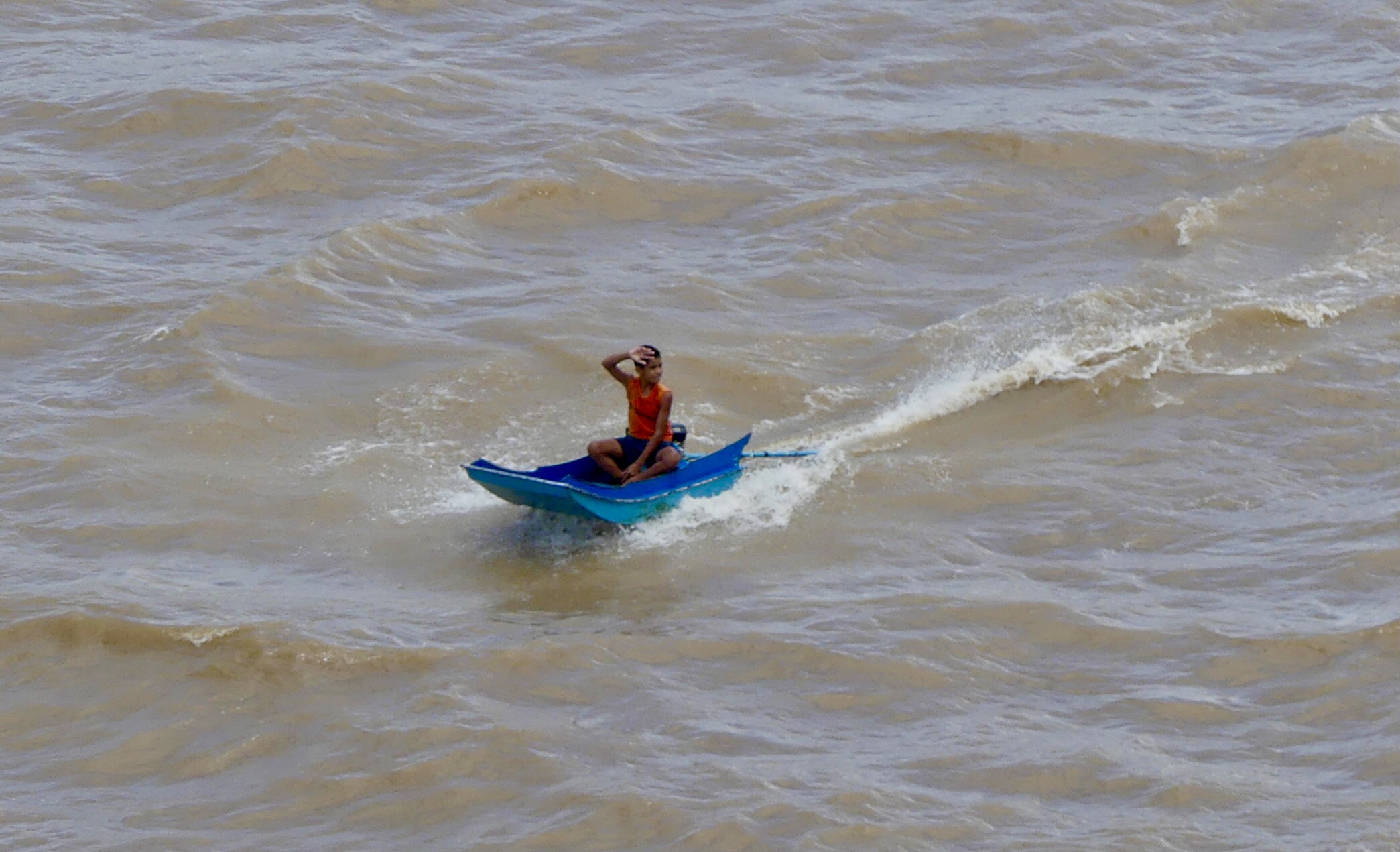
The ship being chased by young man in a long tail boat


Savannah Hawk


March 10, 2023 – Lake Canacari, Brazil


After cruising up the Amazon overnight, at 1430 we anchored off of Lake Canacari, which is connected to the main river by a man made canal.  The zodiacs were launched and we headed up the canal to the lake, looking for birds.  Instead we found a cayman, small, but with a big splash.  There were still more  birds and the giant lily’s once again.  By the time the  zodiac tours were finished, the sun was setting and the last zodiacs came back in the dark.


Great Egret


Local Fisherman


Victoria Amazonica Water Lily


Glittering Throated Emerald Hummingbird feeding


Black Ibis


Red Capped Cardinal


Jacana


Pirahna


Heron
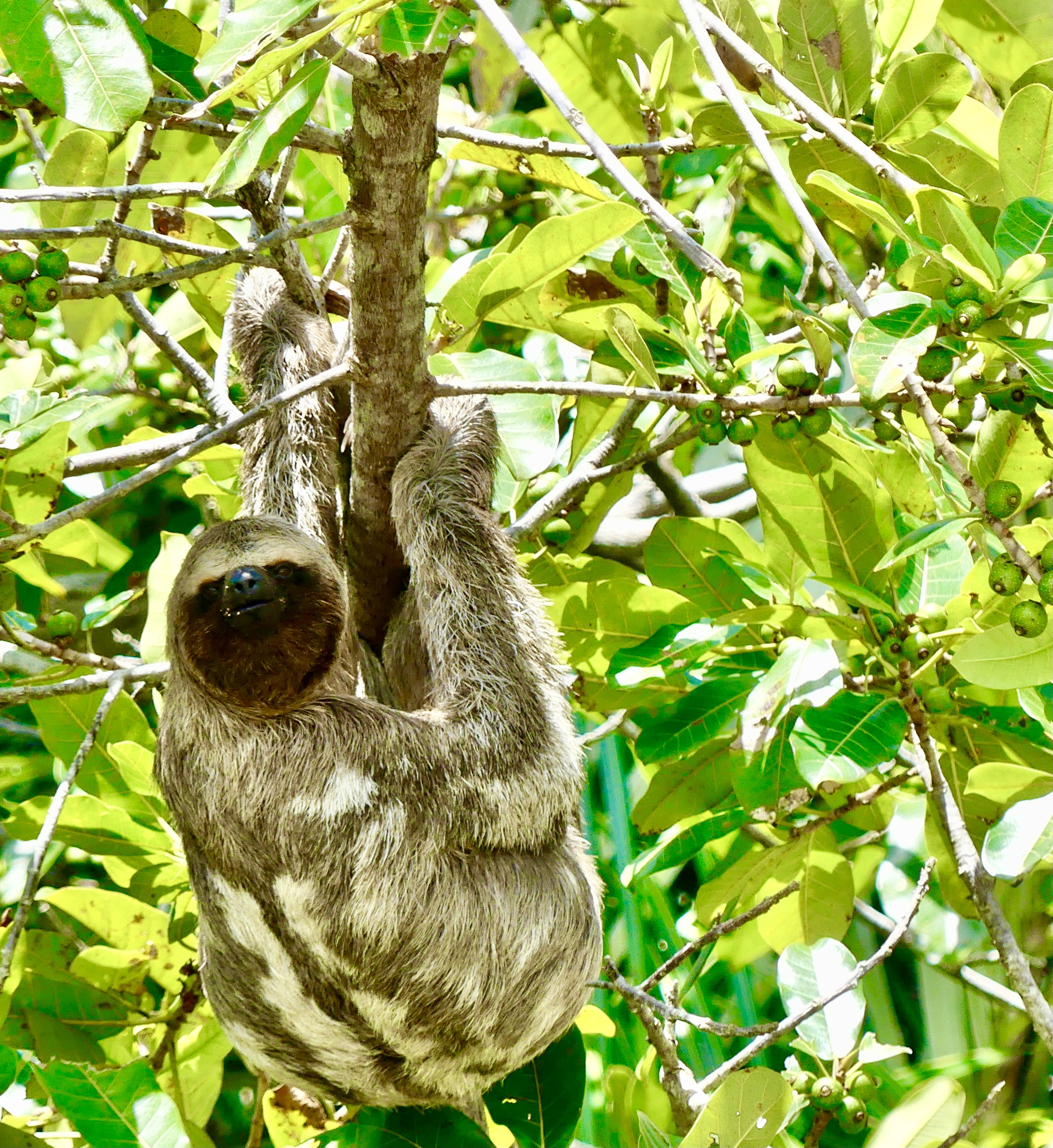

Sloth in tree


Overnight we had thunderstorms and heavy rains.


March 11, 2023, - Manaus, Brazil


Manaus is the furthest point we will go by ship in the Amazon.  Manaus is actually on the Rio Negro and has a populations of 2.5 million.  There is a lot of manufacturing in Manaus, including Harley Davidson, Honda and Electrolux, Sony, Samsung, Panasonic, etc, as well as refineries.


In the early morning hours we passed by the “meeting of the waters”, and then anchored in front of the city center.  The meeting of the waters is where the Rio Negro meets with the Amazon and the tea colored water of the Rio Negro eventually mixes with the main Amazon river.   The cruise terminal pontoon is out of service since one section sank in the fall.


Meeting of the waters, Rio Negro on top and Amazon on bottom


We had arranged a private speedboat tour since all the Seabourn Ventures tours were not allowed to operate by the Brazilian authorities.  Our tour went to the same flooded forests as the Ventures tours and it was great.


Lined Seedeater


Amazonian Cormorant


We are here overnight and Patrick has a Pink Dolphin encounter in the morning.  Pink Dolphins are a freshwater dolphin unique to the Amazon basin.


March 12, 2023 – Manaus, Brazil


All too early the alarm sounded and it was time to prepare for the Pink Dolphin Encounter.  The location is some 65 KM up the Rio Negro from Manaus and took 90 minutes by high speed boat to reach the floating house where the encounter takes place.  The rain was torrential, but the water was warmer than the air.  We put on life jackets and stepped down onto a platform about four feet below the water surface.  The dolphins came up, rubbed against our legs and pushed against us, and performed for us when fed with fish.  We were allowed to touch them, except for the “melon” on the head which contains their sonar.  The water has limited visibility, so their eyes are very small.  The adults are pink and the youngsters are mostly gray.


We stopped at a local village a few miles away and shopped for local handicrafts before returning to the ship.


At 1730 Seabourn Quest weighed anchor and headed back downstream to our next destination.


Monday, March 6, 2023

Brazil Part 2 Recife and Natal

 Brazil Part 2 – Recife and Natal, Brazil


March 3, 2023 – Recife


After 2 days at sea we arrived at Recife, one of the ports we had been at in 2008.  Many guests went to the colonial town of Olinda, which Miriam had visited on that earlier visit.  Olinda sits on a hill some 9 KM from Recife, which sits at sea level with one of the longest urban beaches in the world.  We had planned to spend some time on the beach, but the transfers to the beach we cancelled due to safety and congestion concerns by the shoreside tour operator.  By the time the ship docked the temperature and humidity were both out of sight.


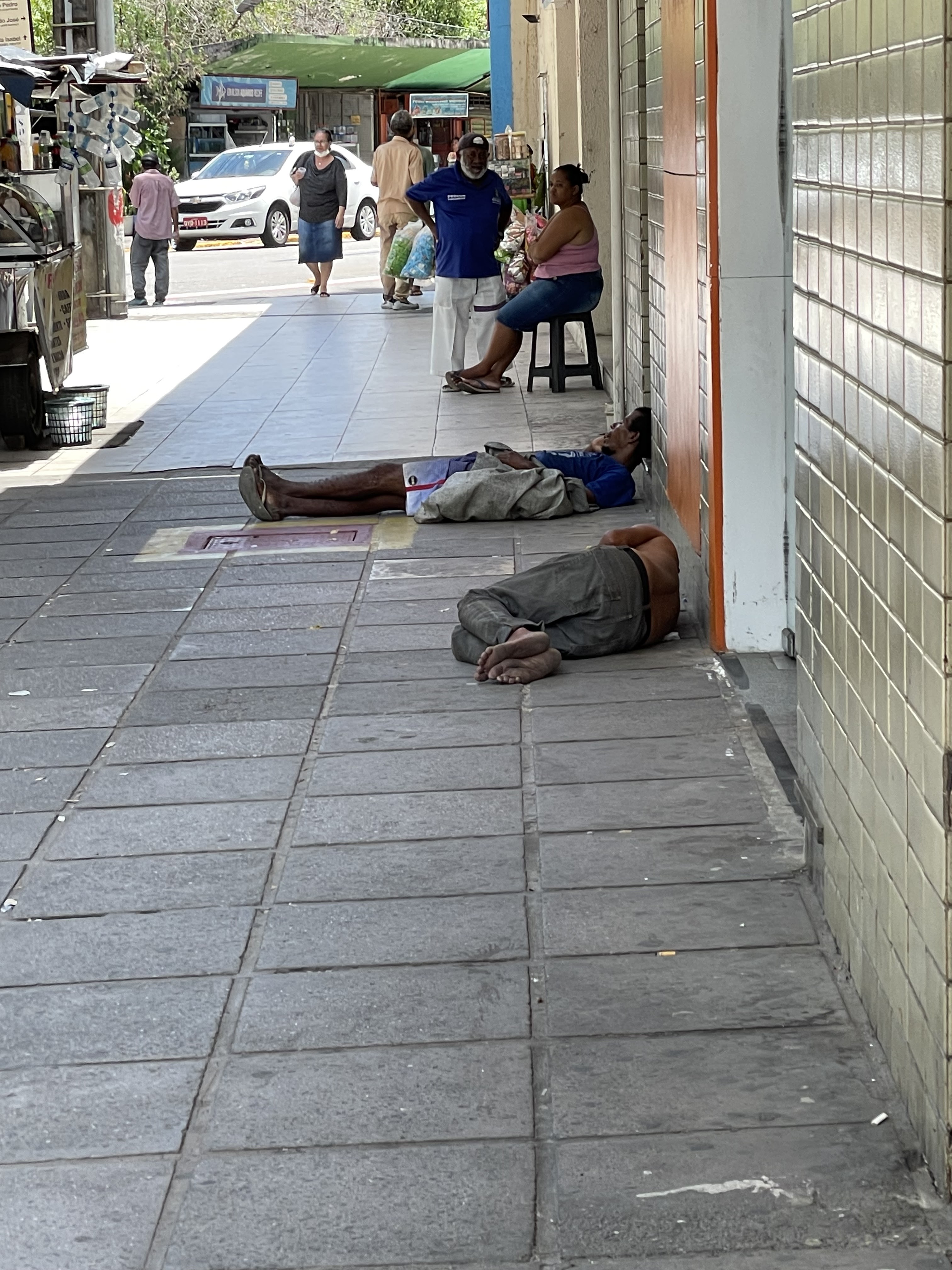
Instead, Patrick rode the shuttle into the Casa da Cultura in the old city where many handicrafts were for sale.  Walking around the immediate neighborhood with many abandoned buildings, crumbling sidewalks, and with many shops selling home goods like appliances and mattresses, stepping around homeless people sleeping on the sidewalks and being accosted by panhandlers, Patrick decided to just return to the ship.


Interior of Casa da Cultura


An actual phone booth in ceramic hat


Recife is known for dolls


Typical street scene


Some of the homeless sleeping on the sidewalks


Colonial era theater


Saturday, March 4, 2023 – Natal, Brazil


Natal was named after the Portuguese word for Christmas on December 25, 1599 and is the capital city of Rio Grande do Norte, a state in Northeastern Brazil.  It is known for massive sand dunes, and dozens of sandy, white beaches stretching more than 9 KM from north to south.


We arrived at the pilot station about 0630 and negotiated the narrow entrance to the small port, passing under a large suspension bridge across the river.  On the southern side of the channel was the star shaped Fortaleza dos Reis Magos.  The fortress was built in 1598 to protect the area from French pirates and during Brazil’s colonial period was one of the most important defensive barriers in Brazil.  For more than 300 years it was used as military quarters, administration and even as a prison.  It is built in the water and is accessible via a pedestrian path.  The name come from the statues of the Biblical Magi at the fort entrance.


Suspension bridge across harbor entrance at Natal


White fortress at harbor entrance - Natal


Local fishing boats


High tide at the beach


Yak Beach at Natal


The courtesy shuttle dropped us at a local handicraft market across the street from one of the city beaches, called Yak beach.  We had intended to walk around town but were advised to stay out on the beach side as the interior roads were not considered safe for tourists.


The beaches were a mix of tidal pools protected by a coral reef and sections open to the surf.  The surf was fairly high, the wind brisk and the temperatures HOT, but the wind did moderate the high temperatures.  At high tide the beach nearly disappears and the vendor carts struggled in the wet sand at water’s edge.


Later that afternoon we had a folkloric show around the pool by local entertainers performing traditional dances.


Natal is also home to the worlds largest cashew tree, covering 8,000 square meters and producing more than 60,000 cashews per year.  The tree is believed to be at least 1,000 years old and is roughly the size of 70 normal cashew trees.  Since the tree is located more than 18 miles from the ship and a lengthy taxi ride, we did not get a chance to actually see the tree.


Seabourn Quest departed Natal for the three day 1000 NM journey to the entrance of the Amazon.  We should cross the bar into the Amazon about noon on the third day.  The entrance has to be carefully timed as March is known for the strength of a tidal bore known as a pororoca, which can be surfed for miles, or can be destructive as it travels at 10-15 knots for up to 300 miles upstream.


Thursday, March 2, 2023

Brazil Part 1

 Brazil Part 1


Ilhabela, Rio de Janeiro and Armacao dos Buzios


February 25, 2023


After several days at sea, we arrived at Ilhabela, on Sao Sabastiono Island, south of Rio de Janeiro about 200 NM.


Ilhabela means “beautiful island” and is famous for gorgeous beaches, dense tropical forests and hundreds of waterfalls.  Before the Portugal colonized Brazil in 1500, the island was the home of an indigenous tribe called Tupinambas.  These people called the island “Ciribai” which means tranquil place.  The island is now a resort playground for both Sao Paulo and Rio de Janeiro, with several large marinas and many small hotels.  We anchored off of Ilhabela’s historic town center and tendered ashore for a variety of tours.  Patrick picked a 4x4 excursion to several waterfalls  and Currall Beach for a swim break.


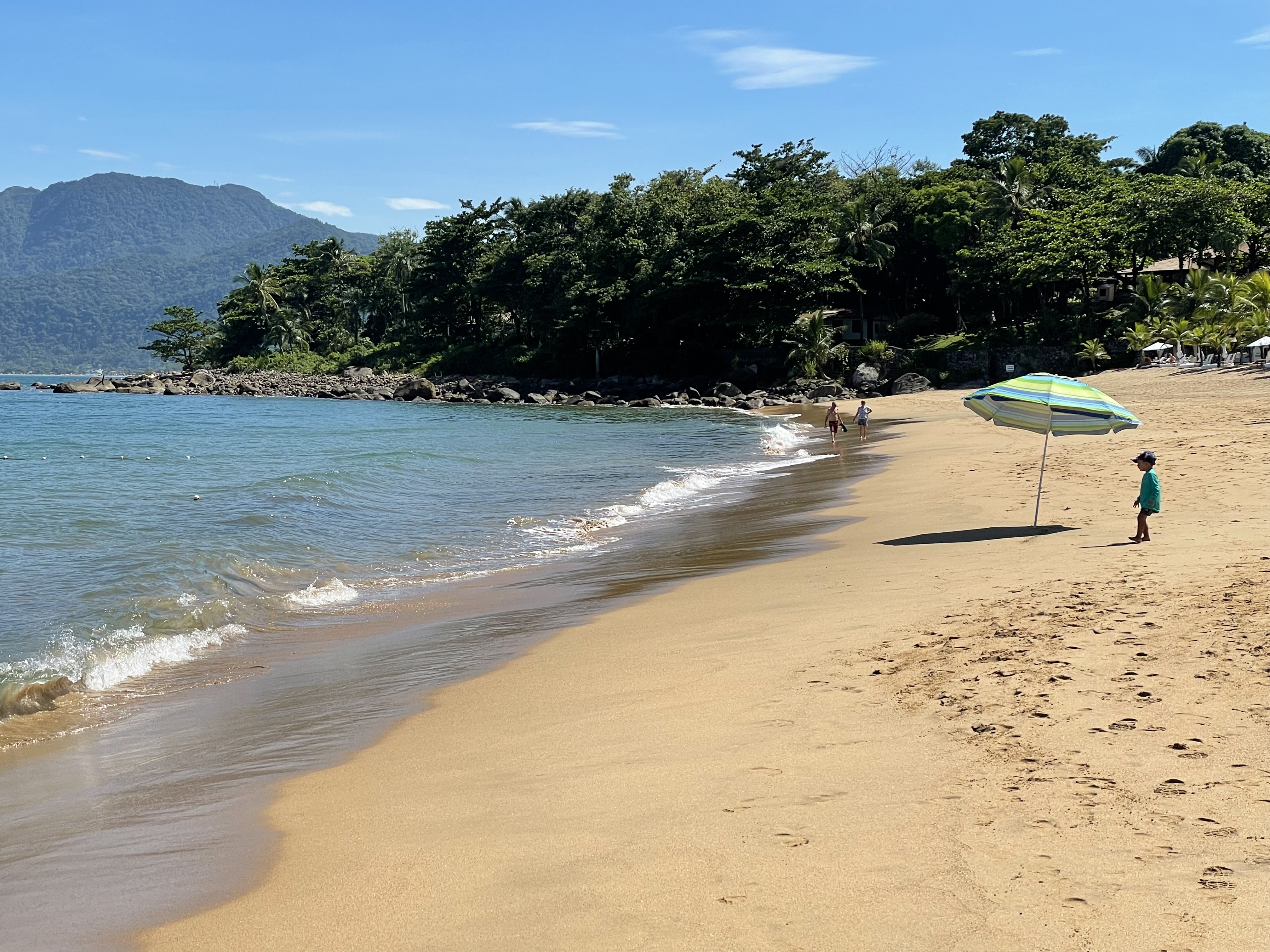
Currall Beach


Typical Ilhabela waterfall


The water was warm and the surf low, so water entry was easy.  The beach was nice, but to get a seat or lounge chair one had to buy some drinks or food from the restaurants that controlled each section of the beach.  However, the prices were reasonable and the Caipirinha’s were good, so it was very acceptable.  Due to recent heavy rains and mudslides, one of the waterfalls was not accessible.  The historic city center is dominated by a church and naval museum and many small shops and restaurants.


Naval Museum


Historic Waterfront - Ilhabela


Typical Street in Historic Town Center


After a full day, Seabourn Quest headed for Rio de Janeiro, getting to the pilot station at 0230, and docking at the cruise terminal at 0430 on February 26 for an overnight stay.


February 26, 2023 – Rio de Janeiro


Rio de Janeiro literally means “River of January”, and is the 6th most populated city in the Americas.  Part of the city has been designated as a World Heritage Site.  Rio was founded in 1565 by Portugal and in 1763 became the capital of the State of Brazil, a state in the Portuguese Empire.  From 1808 to 1822 it was actually the capital of the Portuguese empire under Queen Maria I and later her son Joao, who raised Brazil to the dignity of a kingdom, within the United Kingdom of Portugal, Brazil and the Algarves.  In 1822, the Brazilian war of independence began and Rio became the capital of the Kingdom of Brazil until 1889 and then the capital of the Republic of Brazil until 1960 when the capital was transferred to the new city of Brasilia.


Rio is known for beaches, landmarks such as the statue of Christ the Redeemer atop Corcovado mountain, Sugarloaf mountain with the cable car, Carnival, bossa nova music, and the samba.


The cruise terminal is located in the Gamboa district close to the original downtown area on Guanabara Bay. Guanabara Bay is reputed to be the largest bay in the world by volume.  We were only a few blocks from the Carnival Stadium and there were still several floats on the streets in the morning from the last night of Carnival, although smaller celebrations continued through the evening.  Patrick joined a Seabourn Ventures nature walk in the botanical gardens which back up to the Tijuca State Forest.


The drive to the gardens took 45 minutes.  Due to the many road closures for Carnival, we actually got a good look at many of the neighborhoods of Rio.  Our route included a trip through the tunnel bored through Corcovado Mountain which is dominated by the Christ the Redeemer statue at the very top.  The botanical gardens were started in the 1800’s by the king of Portugal and Brazil.  It is divided into many sections and more than half the species were imported as gifts to the king.  There was an extensive collection of orchids and 18 different species of palm trees.


Jackfruit or Durian


Royal Palms and Statue of gardens founder


Acai berries


View of Corcovado from botanical gardens


Inedible brazilian plantain


Marmoset and pup in botanical gardens


Returning to the ship mid-afternoon we prepared for an evening gala event for those guests on the entire Grand Americas cruise.  The event was held at Casa das Canoas, designed by Oscar Niemeyer in 1951.  It is now an event venue but was originally a private residence perched high on the hills above the beaches in the Canoas neighborhood of Barra de Tijuca, a suburb of Rio.  Oscar Niemeyer is also the person who designed many of the public buildings in Brasilia, the purpose built capital of Brazil.  After appetizers, cocktails, dinner and a Carnival show, it was after 2300 when we finally returned to the ship.


February 27, 2023 – Rio de Janeiro


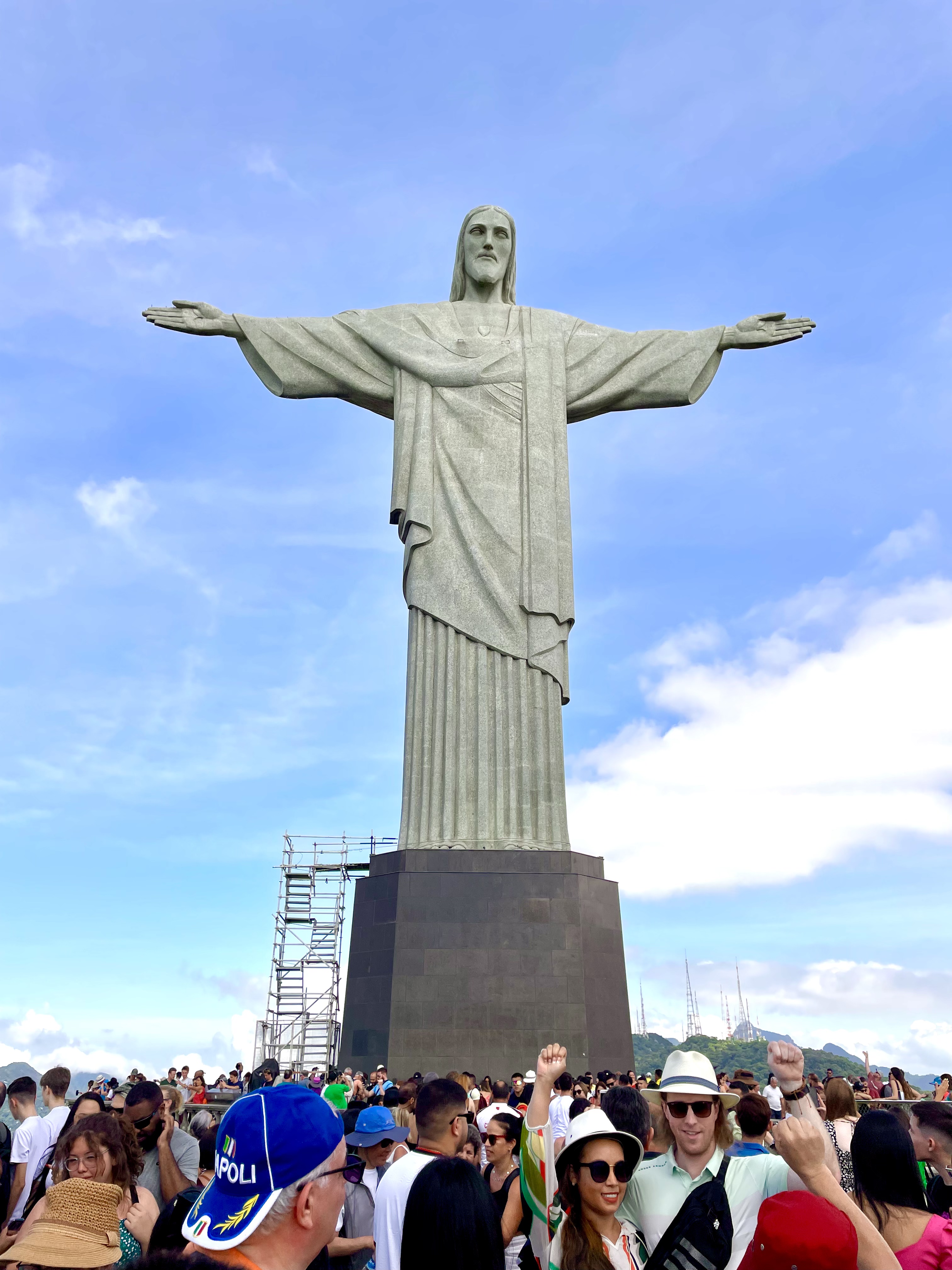
We left on a private city tour with a driver and guide at 0830 and headed first for the Corcovado cog railway to ascend the mountain and view the “Christ the Redeemer” statue at the top.  The crowds were already intense when we reached the end of the cog railway, which has new cars since we visited in 2008, and ascended the 220 steps to the top.  People were pretty good about giving everyone space to get their pictures of both the statue and the surrounding hills and beaches.  Returning to the bottom we headed to Sugar Loaf mountain and the two-stage aerial trams traveling 400 meters to the top.  The gondolas’s for the aerial trams are also new since our 2008 visit.  The views of the beaches and city were spectacular.  By the time we descended to the base once again it was time for lunch.  Our guide took us to the Copacabana Palace Hotel for a traditional Brazilian BBQ at the Churrascaria Palace, located across the street from the hotel just off the beach.  Here they bring around skewers of meats and for a fixed price you can eat as much of the different steaks, chicken, fish, sausages and other cuts of meat, as well as enjoying an extensive buffets of salads, other hot dishes and desserts.


Christ the Redeemer statue


Church of the Immaculate Conception


Following lunch we walked across the street to Copacabana beach and enjoyed the scenery before heading back to the ship, stopping for photos at several cathedrals and the very modern science museum close to the ship.  The Church of the Immaculate Conception is the home church that spurred the construction of the Christ the Redeemer statue.  We were unable to enter any museums since all museums in Rio are closed on Mondays.


Famous wavy sidewalk at Copacabana Beach

Copacabana Beach


The ship departed Rio at 2100, passing by Sugar Loaf and the domestic airport in near darkness, heading back out into the South Atlantic ocean for our next stop in the morning.


Departing Rio at night close to Sugar Loaf


February 28, 2023 – Armacao dos Buzios


This small but upscale community stretches some 8 KM along the shore, with many beaches and small bays.  The former fishing village of Buzios became a favored destination for jet-setters with the visit of Bridgett Bardot in the 1960’s.  In the past the village was a focal point for slave traders, Portuguese and French pirates.  Today Buzios is one of the most charming destinations in the Brazil.


Seabourn Quest anchored about ¾ NM off the main harbor, filled with boats on moorings, and began tender operations shortly after 0800.  Patrick did a kayak tour, a real change from Antarctica and the Falklands since we could wear shorts, t-shirts and sandals with just a kayak vest rather than suit up in a dry suit.  We took a zodiac ride to a beach several KM west of town and entered the kayaks from the zodiacs.  Our route took us along the beaches back towards the main harbor, with birds, sea turtles, snorkelers, divers, water taxis, swimmers and an amazing variety of swimwear on the beach including what only be described as dental floss bikinis.  The wind had picked up and rounding the points into the next beaches was a lot of work in seas up to 3 feet.


Kayaking at Buzios


The ship departed at 1500 with a sail away celebration around the pool in 90 degree clear skies.  The breeze kept it comfortable.


Later that evening we celebrated Miriam’s birthday in the Thomas Keller Grill, with a special cake arranged by Ruben, one of maitre’d’s on the ship who has been on several of our other cruises.